
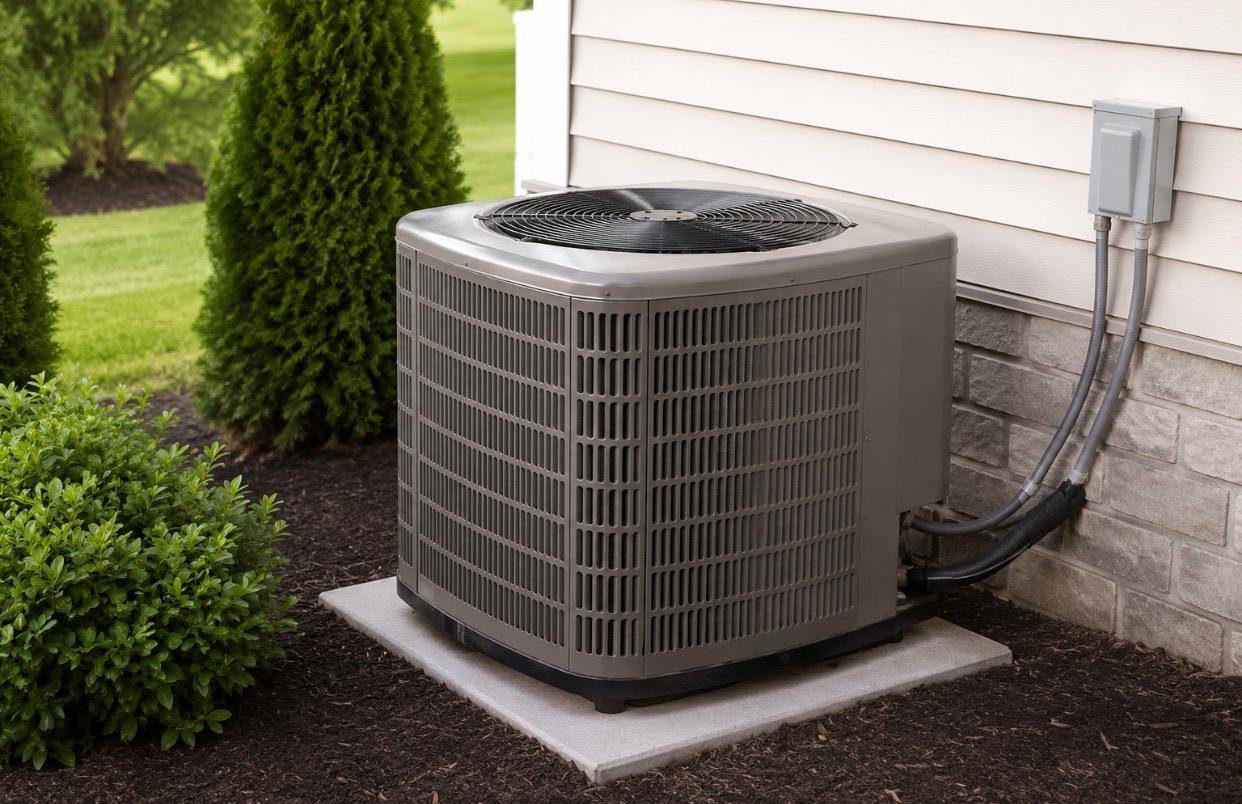
An AC not cold enough is one of the most common complaints we hear from Houston homeowners once summer sets in. Your air conditioner is running, the air coming out is cool, but it just is not cold enough to keep your home comfortable when the temperature outside is pushing 100 degrees.
The frustrating part is that a weak, lukewarm AC often has a simple cause behind it, and sometimes several small issues adding up at once. Before you sweat through another afternoon or assume you need a whole new system, it helps to understand what actually makes an air conditioner lose its cooling power.
In this guide we walk through the nine most common reasons your AC is not cold enough, which ones you can fix yourself, and when it is time to call a professional for AC repair in Humble and the greater Houston area. By the end, you will know exactly where to start and what to check
1. A Dirty Air Filter Is Choking Your Airflow
The single most common reason for an AC not cold enough is a clogged air filter, and it is also the easiest to fix. Your air filter sits in the path of the air your system pulls in, and over time it fills with dust, pet hair, and debris. When it clogs, it restricts the airflow your AC needs to cool your home effectively.
Less airflow means less air passing over the cold evaporator coil, which means less cold air reaching your rooms. A badly clogged filter can even cause the coil to freeze, which makes the problem worse.
Pull out your filter and hold it up to a light. If you cannot see through it, replace it. In the Houston area, filters should be changed every 30 to 60 days during cooling season, and monthly if you have pets or allergies. This one habit prevents a huge share of cooling complaints.
2. The Thermostat Is Working Against You
Sometimes the issue is not the AC at all, it is how the thermostat is set. If your fan is set to ON instead of AUTO, the blower runs constantly, even when the system is not actively cooling. That pushes room-temperature air through your vents between cooling cycles, making it feel like your AC is not cold enough.
Set the fan to AUTO so air only blows when the system is actually cooling. Also make sure the thermostat is set to COOL and a few degrees below the room temperature. If your thermostat is old or reads the wrong temperature, it may be short-cycling the system and never letting it cool properly.
3. Low Refrigerant From a Slow Leak
Refrigerant is what actually absorbs the heat from inside your home. When levels drop because of a leak, your AC loses cooling capacity and starts blowing cool but not cold air, running longer and longer without ever reaching the set temperature.
Because refrigerant circulates in a sealed loop, low levels always mean a leak somewhere. Signs include weak cooling, a hissing or bubbling sound near the unit, ice on the refrigerant lines, and rising energy bills. Refrigerant work requires a licensed technician to find the leak, repair it, and recharge the system, so this is a job for professional AC repair. (link “AC repair” to /ac-repair/)
4. Dirty Condenser Coils on the Outdoor Unit
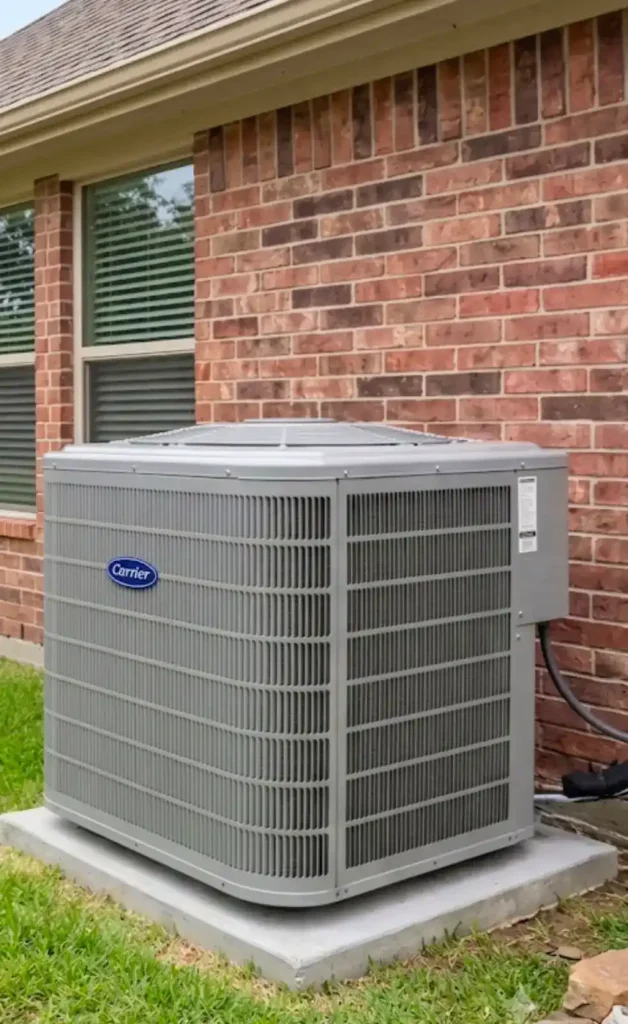
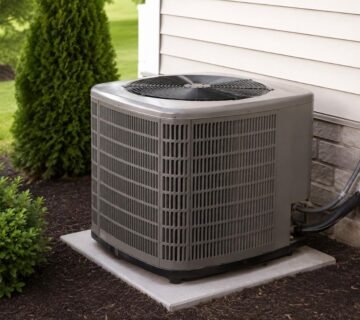
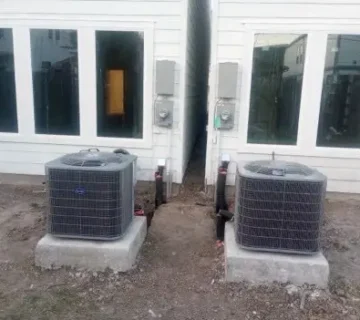
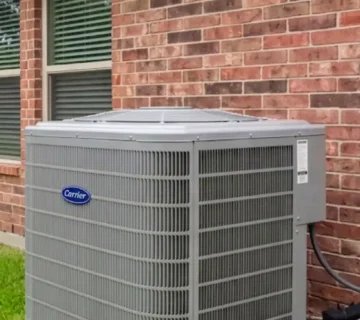
Your outdoor unit is responsible for dumping the heat your system pulls out of your home. It does this through the condenser coils, and when those coils are covered in dirt, grass clippings, and grime, they cannot release heat efficiently. The result is an AC that runs hard but cannot cool your home down properly.
This is especially common in Houston during spring and summer when pollen, mowing, and general debris build up fast. Turn the system off, clear away leaves and debris, keep at least two feet of clearance around the unit, and gently rinse the coils with a garden hose from top to bottom. Never use a pressure washer, since it can bend the delicate fins.
5. A Frozen Evaporator Coil
It sounds backwards, but a frozen coil makes your AC less cold, not more. When ice forms on the evaporator coil, it blocks the airflow and the heat exchange the coil is supposed to provide, so your system blows weak, lukewarm air.
Freezing usually comes from restricted airflow (a dirty filter again), low refrigerant, or a failing blower. If you see ice on the indoor unit or the copper lines, turn the AC off and let it thaw completely, which can take several hours. Replace a dirty filter, then restart. If it freezes again, you have an underlying issue that needs a technician.
6. Leaky or Poorly Insulated Ductwork
Your AC might be producing plenty of cold air at the unit, but if your ductwork leaks, a big chunk of that cold air never reaches your rooms. In Houston homes, ducts often run through attics that reach 130 to 150 degrees in summer, so any leaks or missing insulation let your cold air escape and pull hot attic air in.
Signs of duct problems include some rooms being much warmer than others, weak airflow from certain vents, and higher-than-expected energy bills. Duct sealing and insulation can make a dramatic difference in how cold and even your home feels, and it is work best handled by a professional.
7. An Undersized or Aging System
If your AC has never quite kept up on the hottest days, the system may simply be too small for your home. This often happens after a home addition, a converted garage, or an enclosed patio increases the square footage without an upgrade to the AC.
Age matters too. After 10 to 15 years, air conditioners lose cooling capacity even with good maintenance. If your system is older, runs constantly, and still leaves your home warmer than you want, it may be reaching the end of its useful life. In that case, our team can assess whether a repair makes sense or whether a properly sized AC installation is the smarter long-term move. (link “AC installation” to /ac-installation/)
8. A Failing Compressor
The compressor is the heart of your cooling system, the component that pressurizes and circulates refrigerant to move heat out of your home. As it begins to fail, its cooling output drops, and you get air that is cool but never truly cold, no matter how long the system runs.
Warning signs include unusual noises from the outdoor unit, the breaker tripping, hard starting, and a steady decline in cooling performance. Compressor problems are serious and expensive, so they need a professional diagnosis. Depending on your system’s age and warranty, repair or replacement may make more sense, and an honest technician will lay out both options.
9. Blocked Vents and Registers Inside Your Home
This one is easy to overlook. If furniture, rugs, curtains, or boxes are blocking your supply vents, the cold air cannot circulate properly, and certain rooms will feel like the AC is not cold enough even when the system is working fine.
Walk through your home and make sure all supply and return vents are open and unobstructed. Do not close vents in unused rooms either, since that raises pressure in your ductwork and can actually reduce your system’s overall efficiency. Good airflow throughout the house helps every room stay comfortable.
When to Call a Professional
You can handle several of these yourself, changing the filter, adjusting the thermostat, clearing the outdoor unit, and unblocking vents. But you should call a licensed technician when:
Your AC is still not cold enough after the basic checks. You see ice on the unit or refrigerant lines. You hear hissing, which suggests a refrigerant leak. Some rooms are far warmer than others, pointing to duct issues. Your energy bills have climbed without a change in usage. The outdoor unit makes unusual noises or the breaker keeps tripping.
Mkazza Air Conditioning provides fast, same-day AC repair across Humble, Houston, Atascocita, Kingwood, and Spring. We pinpoint exactly why your AC is not cold enough, explain it in plain language, and get your home comfortable again. Call (346) 216-1544 for a quick response. (link “AC repair” to /ac-repair/)
How to Keep Your AC Running Cold All Summer
Most cooling problems are preventable, and a little routine care goes a long way in the Houston heat. Here are the habits that keep your AC cold and efficient:
Change your air filter every 30 to 60 days during cooling season. Keep your outdoor unit clear of debris and rinse the coils a couple of times a season. Keep all vents open and unblocked so air circulates freely. Schedule professional HVAC maintenance at least once a year, ideally twice, once before summer and once before winter. (link “HVAC maintenance” to /hvac-maintenance/)
Professional maintenance is the biggest difference-maker, because it catches refrigerant leaks, dirty coils, weak components, and airflow problems before they leave you with an AC that cannot keep up. According to ENERGY STAR, a well-maintained cooling system runs more efficiently and delivers better, more consistent cooling.
Frequently Asked Questions
Why is my AC running but not cold enough?
The most common reasons are a dirty air filter restricting airflow, low refrigerant from a leak, dirty condenser coils, a frozen evaporator coil, or leaky ductwork. Start by checking your filter and thermostat, then call a professional if the air still is not cold enough.
Why is my AC not cooling below a certain temperature?
On very hot days, an aging, undersized, or low-refrigerant system may not be able to cool below a certain point because it cannot keep up with the heat load. Dirty coils and duct leaks make this worse. A professional can identify the limiting factor.
Can a dirty filter make my AC less cold?
Yes. A clogged filter restricts airflow across the evaporator coil, which reduces cooling and can even freeze the coil. Replacing the filter regularly is the single easiest way to keep your AC cold.
How can I make my AC colder?
Start with the basics, replace the air filter, set the fan to AUTO, clear the outdoor unit, and unblock your vents. If those do not help, you likely have a refrigerant, coil, or ductwork issue that needs a professional.
When should I call a technician about weak cooling?
Call a professional if your AC is still not cold enough after changing the filter and checking the thermostat, if you see ice or hear hissing, if some rooms are much warmer than others, or if your energy bills have spiked. These point to issues that need expert diagnosis.

No comment